

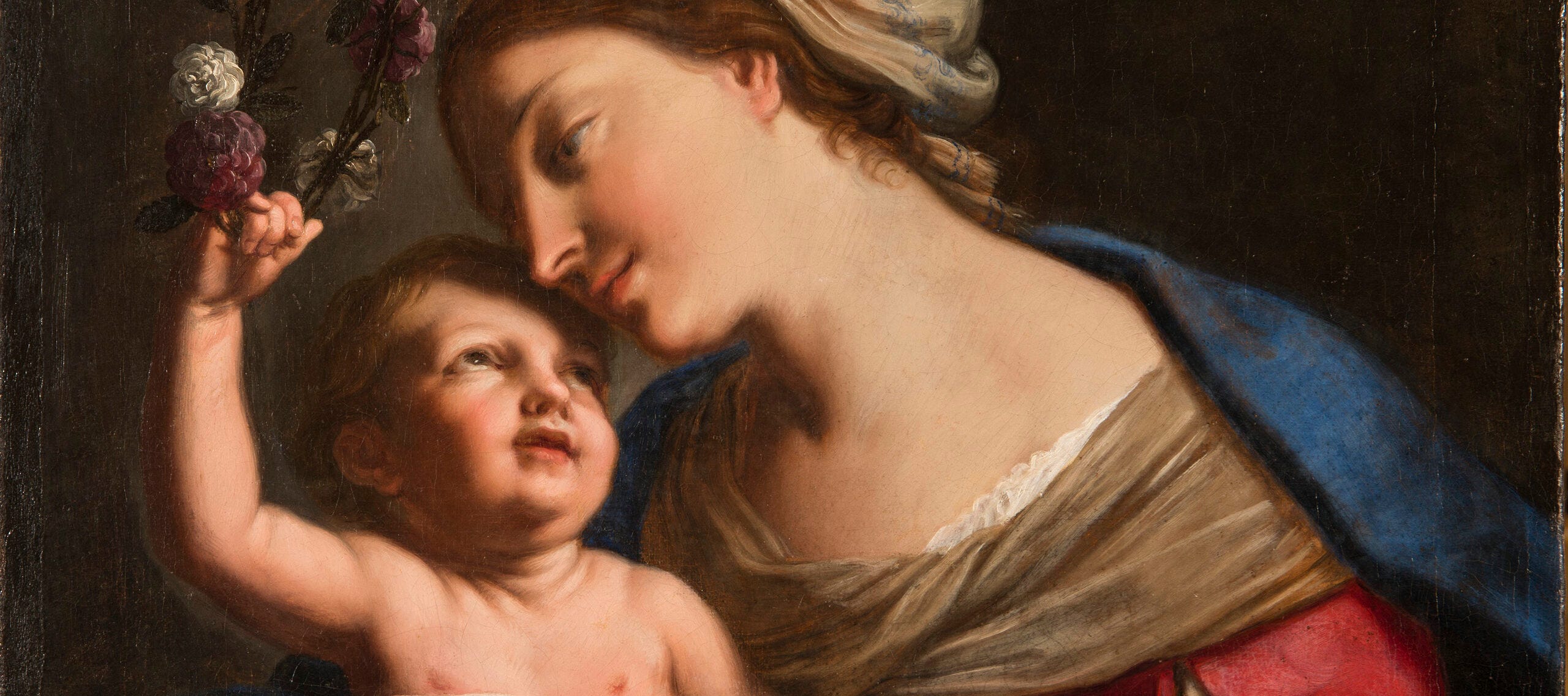
My mother continually labeled me “evil” from the age of three until I was a young adult. I spent the better part of my life trying to overcome the belief that she was right.
Obviously, labeling a small child “evil” is a little much. It’s not as if I was nailing the neighborhood pets to trees. But I could be pretty insufferable. My mother described her childhood self in the following ways: obedient, responsible, and affectionate, and I believe her. My childhood self was the opposite: I was bossy, obstinate, and I thought I knew everything. I regularly argued with her and with all kinds of authority figures. I give myself a migraine from cringing when I recall some of the things I challenged adults on.
Like the time in high school when my teacher was discussing which of Shakespeare’s plays include plays as part of the plot. The Taming of the Shrew did not have a play-within-a-play, I argued. But my confidence was quickly shattered when the teacher started reading from the play and the entire class watched me get corrected. It never crossed my mind that someone who had spent her career studying the Bard might know more than I did.
Or the time I argued with the choir teacher about the location of a concert he was attending. He told me the venue, but I was convinced I had heard on the radio that it was being held somewhere else. I kept arguing anyway until he finally offered to retrieve his tickets from his office to prove me wrong. He was right, of course. It’s still not clear to me why I chose that hill. I ran into him a few years after graduation, at which point he felt free to tell me what a pain in the ass I was.
At home, I’d turn simple requests into courtroom dramas. When my mom asked me to vacuum before company arrived, I argued that I’d already done it days earlier. She insisted; I kept debating as if my freedom depended on it, until she finally screamed.
I struggled hard with attention and slacked on most of my studies, even though I harbored grand ambitions of becoming a serious scholar and doing something important with my mind. I didn’t sneak out or party. I just undermined her authority at nearly every turn. And she was raising me alone.
As I wrote about recently, my father showed me love, but he was mostly absent, happy to handle the fun parts of parenting while leaving the hard work to her. He wasn’t there to enforce “shut up and listen to your mother.”
It wasn’t just my private mutiny that soured my mother on me. When I felt she was being unfair, I could be outright cruel. A handful of times I told her I hated her, and a few times I called her a bitch. I had become the angry-defiant-child-with-an-absent-father cliché. It was a stereotype I was aware of even then, but I didn’t know how to stop becoming when my emotions boiled over. The shame hit me hard after every time. I always apologized, but the damage was done.
The famed psychologist Jordan Peterson has a rule: do not let your children become people you do not like. My mom did not have the support needed to shape me into someone she liked. She told me she did not like me often. “I love you but I don’t like you” were her exact words. She loved me despite myself.
Again, extreme, but for my mom, my behavior wasn’t just adolescent rebellion. To her, each act felt like a personal betrayal. Each undone chore or messy room was proof I didn’t love her. Talking back confirmed I was an evil ingrate.
Her general negative view of me meant that even neutral or positive moments could be reinterpreted as something sinister. At eleven, as she got ready for a date with the man who would become my stepdad, I told her she looked nice. She accused me of lying to sabotage her happiness. I denied it, but there was no convincing her otherwise. For years after, I questioned my own intentions and even my sanity around that moment.
That pattern continued with similar accusations. I must be guilty of something, and the only acceptable resolution was a full confession. The last accusation, in my twenties, was that I wanted custody of my younger brother only for the Social Security money.
It was a devastating accusation on its own, but also because by that point I had done real work to outgrow my childhood patterns. The accusation made it painfully clear: in her eyes, I would never be good enough. I was fixed as morally suspect.
She saw the world through a lens that interpreted even benign or generous actions as potentially malicious. She was never diagnosed, but her behavior conforms to some personality disorders.
When I consider her life, it is not difficult to see how she arrived there. She was abandoned by her father as an infant, denied affection and treated as a servant by her alcoholic mother, sexually abused by her stepfather, raped by her first boyfriend, and later emotionally abandoned by my father. Every relationship in her life had confirmed that people were not safe.
And then I showed up. A strong-willed, ungrateful child who pushed against her constantly and adored the father who had abandoned us. Something she could not reconcile.
My mom is someone who never had a safe place. She had too much thrown at her from every angle, for too long, until she shut down and all she could do was sort the world into simple categories. Safe or unsafe. Good or evil. Even her own child.
My mother is an extreme case, but the mechanism behind what happened to her isn’t rare at all. When someone grows up without safety, through abandonment, abuse, or neglect, the mind adapts. It stops trying to hold complexity because complexity is a luxury. Psychologists actually have a name for it. It’s called splitting. Everything gets sorted fast into safe or unsafe, good or evil. It becomes a protective shield, but it blocks the bad and the good.

And I think we are seeing this same pattern on a societal level. We live in a world that throws more information and conflict at us than any human brain evolved to handle. When we feel overwhelmed, many of us reach for the same survival strategy my mother used. We rarely call people “evil” outright anymore, but we achieve the same effect with other labels. On one side, terms like “Nazi,” “fascist,” or “white supremacist” are used in ways that can turn opponents into something morally monstrous and dangerous. On the other side, people do the same thing by reducing those they disagree with to crude stereotypes, mocking their intelligence (e.g., “libtard”), their appearance (e.g., “septum ring theory”), or implying they are inherently inferior because of who they are or what they believe.
To be clear, I’m not suggesting we stop naming things. There are real cases of authoritarian behavior, genuine hatred, and actual harm that need to be identified and called out. The problem is how casually and imprecisely we assign these labels. We apply them with limited context, often relying on secondhand information or the consensus of the side we identify with, rather than taking the time to understand.
I see it play out constantly. Someone expresses a view that falls outside the accepted line, and for others, sitting with anything more nuanced feels exhausting or threatening. So they are quickly assigned a label that carries far more weight than the moment calls for. What should be a tool for moral clarity becomes a weapon that is used to signal allegiance to a tribe.
And we don’t just criticize what someone did or said. We turn it into who they are. A single action or belief becomes the whole person. And once someone is reduced to a label, the conversation most often ends. Empathy is over. It dehumanizes, and in some cases, it even gets used to justify violence.
Nuance disappears. The other person stops being a complicated human and becomes a symbol of everything that is wrong.
When I finally got some distance from my mom, I was able to look at myself with more nuance. I realized my childhood defiance wasn’t proof I was rotten. The truly cruel things I said to her mattered, and I had to own them, but they didn’t get to be the whole story of who I was. First of all, I was a child. And I wasn’t some special brand of evil or uniquely bad. I was regular bad, just delivered at maximum volume and full commitment. And I was capable of changing once I learned how to channel it.
Before I got there, I looked for salvation for my sins everywhere. Jesus and a stint at Bible college. It turns out that being constantly reminded of what a sinner I was, and how Jesus loved me despite myself, felt a little too familiar. I sought healing elsewhere.
I turned to relationships where I subconsciously recreated the exact dynamic I had with my mother as a child: desperately trying to win the affection of people who were hard to please and slow to forgive. It was basically love disguised as a 24/7 struggle session, now with work and bills to boot.
And I threw myself into demanding volunteer roles, hoping that if I performed enough charity, someone, anyone, would finally tell me I was good. I found some satisfaction in being of service, but it couldn’t fully redeem the wretch within.
Finally, I turned to psychedelic journeys and reparenting work. In one session, I sat with my younger self, that loud, defiant, know-it-all girl, and delighted in her. Not in spite of her intensity, but because of it. She was not a problem. She was a passionate and sensitive kid with a very unstable foundation, trying to make sense of the world.
I also realized that many of the traits I was taught to see as flaws are context dependent. My strong will and questioning nature became strengths when paired with discipline and humility. Left unchecked, they made me insufferable, but directed properly, they have become some of my best qualities.
And then I sat with my mother too. Not the exhausted, hardened woman who called me evil, but the innocent little girl she once was, before life broke her trust over and over again. I understood why she couldn’t love me better. That shift didn’t erase the pain, but it freed me to carry the story differently.
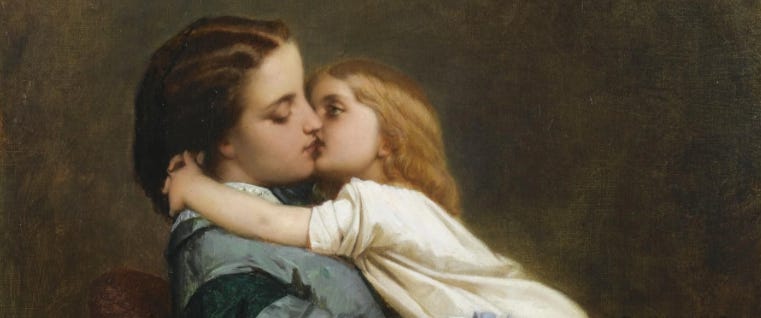
We all have that same choice. We are living in an era of rigid moral categories, where ambiguity feels intolerable. When we feel overwhelmed, it becomes easier to label than to make sense of things. Without building our capacity to sit with discomfort, to pause when the impulse to sort people into simple boxes of us versus them surges, we will keep repeating the same pattern: judge first, cause unnecessary harm, and see clearly later, if at all.
Or we can interrupt the pattern. Notice the overwhelm. Resist the reduction. And choose, instead, to understand.
Really well written and DEEP!
Your raw and honest here and I think the world needs a lot more of that.
It speaks volumes about how empathic you are that you can give your mother so much grace. Many people chose instead to cling to resentment and victimhood. You show us a more enlightened path.
That you can extend the same grace to into the political arena speaks volumes about your intellect. Many people chose instead to cling to resentment and victimhood. You show us a more enlightened path.